Your business name, logo and product names are some of your most valuable assets. Registering them as trademarks gives you clear proof of ownership and the right to act if someone copies them. Here is how the process works in Trinidad and Tobago.
The law and the office
Trademarks are registered with the Trinidad and Tobago Intellectual Property Office (IPO) under the Trade Marks Act, No. 8 of 2015, which came into force in 2020. The Act modernised the system, allowed online filing and brought Trinidad and Tobago into the Madrid Protocol, so international registrations can also cover the country.
What can be registered
A trademark is any sign that distinguishes your goods or services from someone else's: words and business names, logos and designs, slogans, and in some cases colours, shapes, sounds and other non-traditional marks.
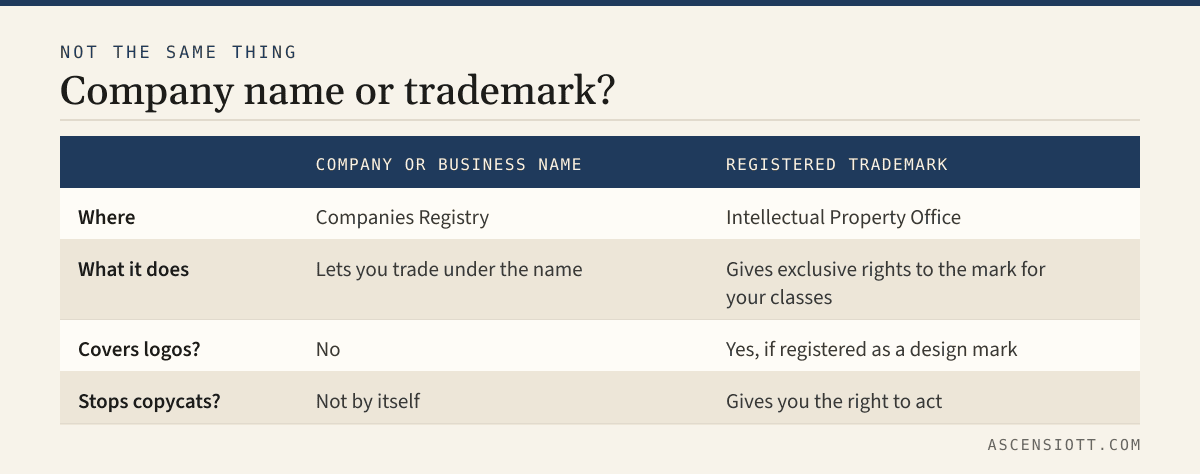
Registering a company name does not, on its own, give trademark rights.
The process
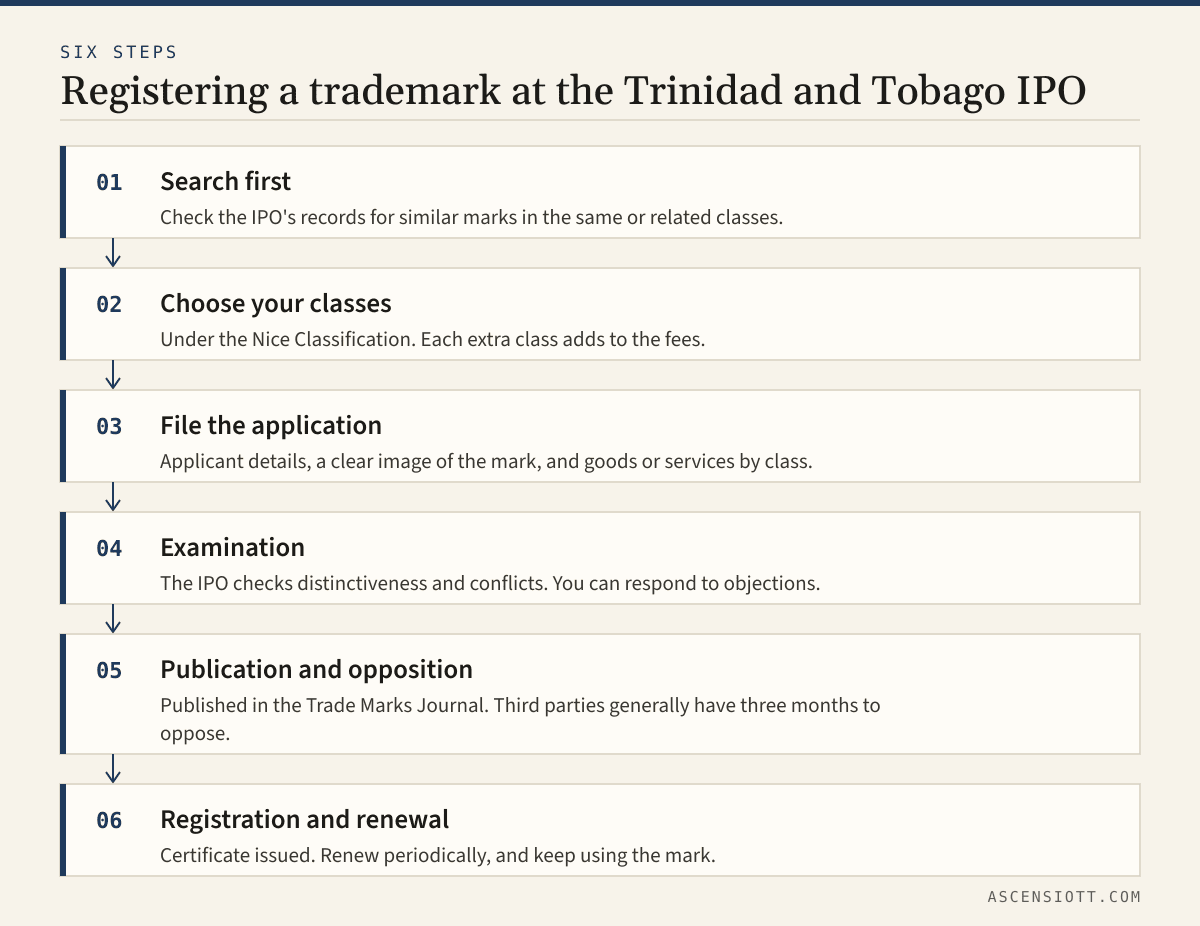
Expect several months from filing to certificate.
1. Search first
Before applying, search the IPO's records for similar marks in the same or related classes. A similar earlier mark can lead to refusal or an opposition, so a search saves time and fees.
2. Choose your classes
Goods and services are grouped into classes under the international Nice Classification. Your application must list the classes and the specific goods or services you want to protect.
3. File the application
The application includes the applicant's details, a clear representation of the mark and the list of goods and services by class. You don't need to be using the mark already, but you should intend to use it.
4. Examination
The IPO checks that the mark is distinctive, isn't descriptive or misleading, and doesn't conflict with earlier marks. If there are objections, you have a chance to respond.
5. Publication and opposition
Accepted applications are published in the Trade Marks Journal. Third parties then have a set period, generally three months, to oppose.
6. Registration and renewal
If there is no successful opposition, the mark is registered and a certificate issued. Registration must be renewed periodically, and a mark that isn't used for five years can become vulnerable to removal.
Starting a business at the same time? See our guides to registering a company and getting a BIR number.
Quick answers
Do I need to register my trademark? It isn't compulsory, but registration gives much stronger, clearer rights than relying on use alone.
Is a registered company name a trademark? No. Company and business name registration and trademark registration are separate systems.
How long does it take? Several months at least, because of examination and the opposition period.
Can a foreign trademark cover Trinidad and Tobago? Yes. Trinidad and Tobago is part of the Madrid Protocol, so an international registration can designate it.
Official fees and timelines change, so check the IPO for current figures. Ascensio Business Services prepares and files trademark applications, from search to certificate, from TTD 2,500 for one class plus IPO fees. Ascensio is not a law firm and does not give legal advice; contested oppositions should be handled by an attorney.