Board minutes are the official record of what a board decided and why. Auditors, regulators, banks, courts and future directors may all rely on them. Yet many organisations either record far too little or try to write down every word. Good minutes sit in between.
What minutes are for
Minutes record decisions, the key reasons for them, and who is responsible for what happens next. They are not a transcript. A reader years later should be able to see what the board knew, what it decided and whether proper process was followed.
What every set of minutes should include
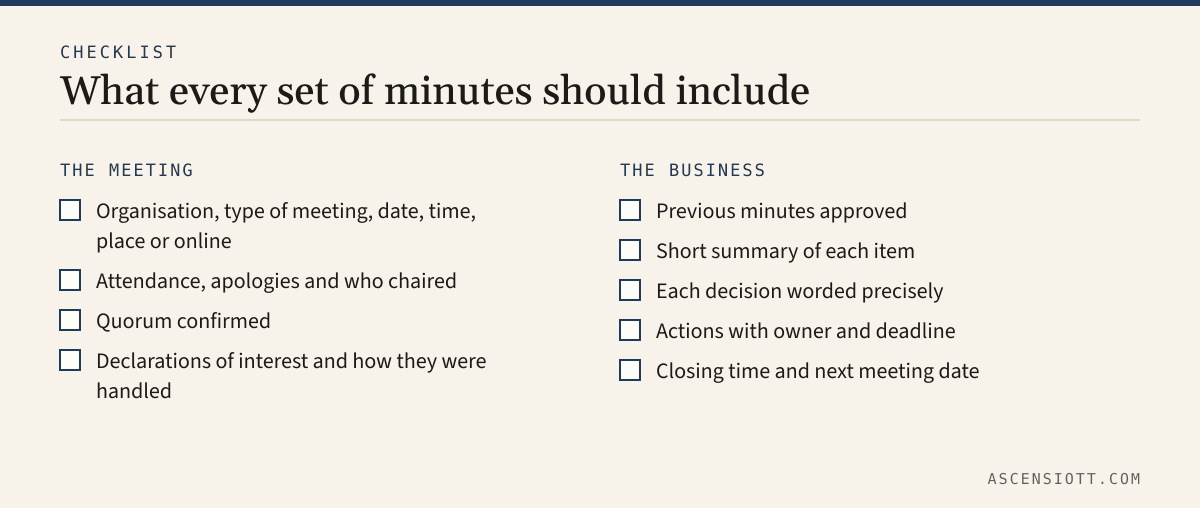
Enough to show the board followed proper process.
How much discussion to record
Record enough to show the board considered the matter properly: the main points raised, the information it relied on, and any significant concerns. You don't need to record who said what, unless a director asks for their dissent to be minuted.
Words that matter
Resolutions should be clear and complete enough to act on, for example: "RESOLVED that the company open a business account with [bank] and that any two directors be authorised to sign." Vague wording such as "the board discussed the bank account" is not a decision.
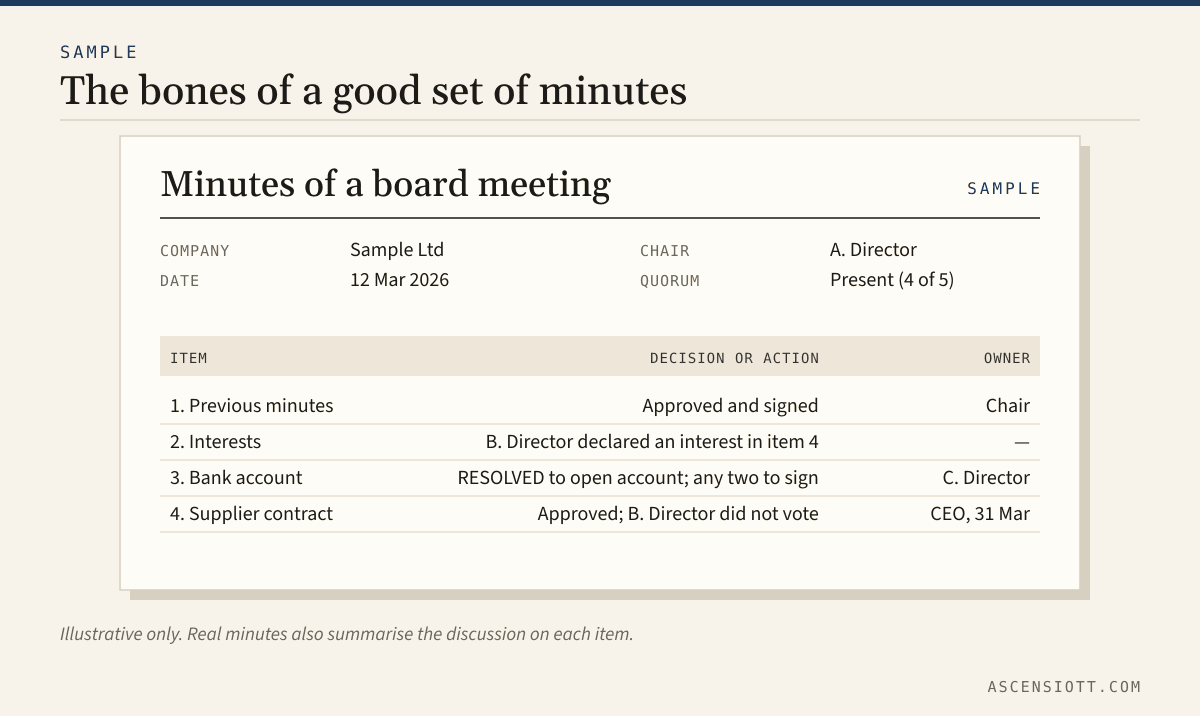
Decisions worded precisely, with an owner for every action.
What to leave out
- Personal opinions and side conversations.
- Informal remarks and jokes.
- Detailed legal advice, which may be better kept in a separate privileged note.
After the meeting
- Circulate a draft to the chair promptly, while memories are fresh.
- Approve the minutes at the next meeting and have the chair sign them.
- Keep the signed minutes in the minute book or a secure electronic folder.
The same principles apply to AGMs, committee meetings, nonprofit boards and homeowners' associations. For a company in Trinidad and Tobago, minutes sit alongside the registers and filings covered in our guide to annual returns and good standing. If you minute from a recording, a clean transcript is usually enough.
Quick answers
Should board minutes be verbatim? No. Minutes record decisions, key reasons and actions, not every word.
Who signs the minutes? Usually the chair, once the board has approved them at the next meeting.
Can minutes be taken from a recording? Yes. Many organisations record meetings so the minute-taker can check details before drafting.
How should a resolution be worded? Precisely enough to act on, starting "RESOLVED that…", naming what was decided and who is authorised.
Ascensio Business Services takes and drafts board, committee and AGM minutes, in person in Trinidad and Tobago or from recordings for organisations anywhere.