A chronology is one of the most useful documents in any file. It shows counsel at a glance what happened, when, and where the evidence for each event can be found. Done well, it saves hours at every stage, from the first conference to closing submissions. Done badly, it becomes one more document nobody opens.
Start with the purpose
Before you begin, agree what the chronology is for. One for an advice on merits can be short and selective. One for trial preparation or an appeal usually needs every material event, with references to the bundle.
Use a simple, consistent layout
A table works best:
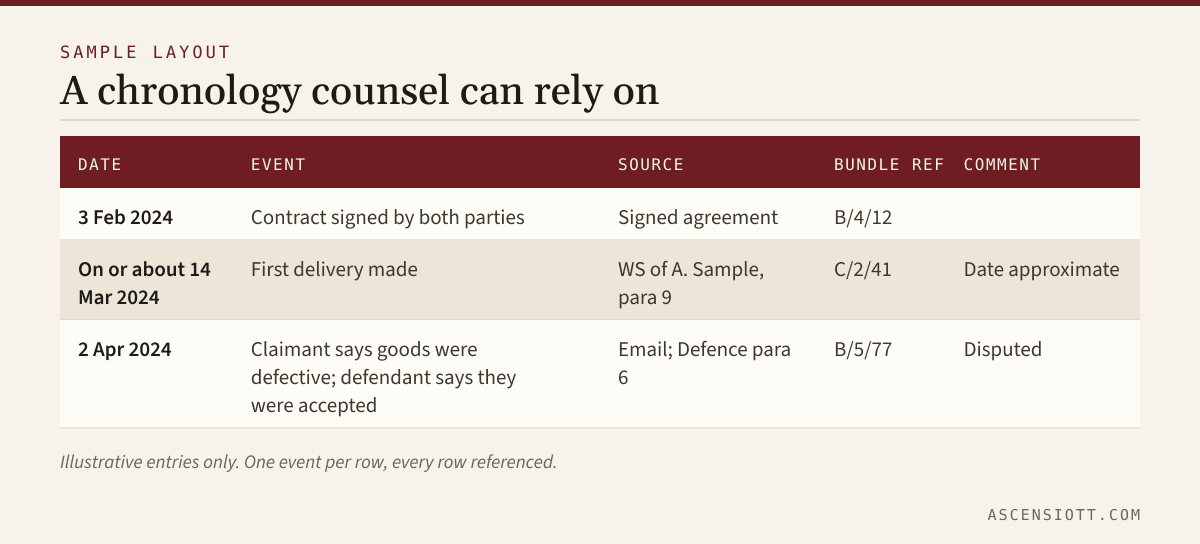
Neutral wording, a source for every row, disputes marked.
- Date (and time where it matters), in one consistent format.
- Event, in one or two neutral sentences.
- Source: the document, witness statement or transcript reference.
- Bundle reference, by tab and page.
- Comment, for disputed facts or points for counsel to note.
Keep one event per row. If two things happened on the same day, give each its own row.
Stay neutral
A chronology records facts and where they come from. It is not the place for argument. Where a fact is disputed, record both versions and their sources, and mark the row as disputed, so counsel sees the conflict immediately.
Reference everything
Every row should point to its source. A chronology without references can't be checked, and counsel won't rely on it in court. If the bundle isn't paginated yet, use document titles and dates, then update the references once the trial bundle is final.
Handle uncertain dates carefully
Where a date is approximate, say so: "on or about 14 March 2024" or "mid-2023 (date not confirmed)". Never guess a date to make the table look complete.
Keep it live
A chronology is most valuable when it is updated as the case develops. Add new disclosure, witness statements and transcript references as they come in, and date each version so everyone knows which one is current.
Chronologies from transcripts
Long hearings and interviews are often easier to use once their key events are pulled into a chronology with timestamps or page references. This is especially helpful for appeals, where counsel needs to locate specific evidence quickly. See also choosing a transcript style.
Quick answers
Should a chronology include disputed facts? Yes, recorded neutrally with each side's source and clearly marked as disputed.
What is the best format? A table with date, event, source, bundle reference and comment columns, one event per row.
Who usually prepares it? Often a junior, a paralegal or a clerk, then checked by counsel.
How do I record an uncertain date? Say it is approximate ("on or about") rather than guessing.
Ascensio Legal Support prepares chronologies and case briefs from bundles, disclosure and transcripts for chambers across the Caribbean.