Many chambers do excellent work and still struggle with cash flow. Fee notes go out late, payments aren't matched to matters, and outstanding fees are chased only when someone has time. A few simple habits make a real difference.
Send fee notes promptly
The longer a fee note waits, the less likely it is to be paid quickly. Agree a routine, for example issuing fee notes at the end of each stage of a matter or at the end of each month, and keep to it.
Make every fee note clear
A fee note that raises questions gets paid late. Each one should show a unique number and date, the client and matter with the file number, a short description of the work, the amount, any VAT and the total, payment terms, and the reference to quote when paying.
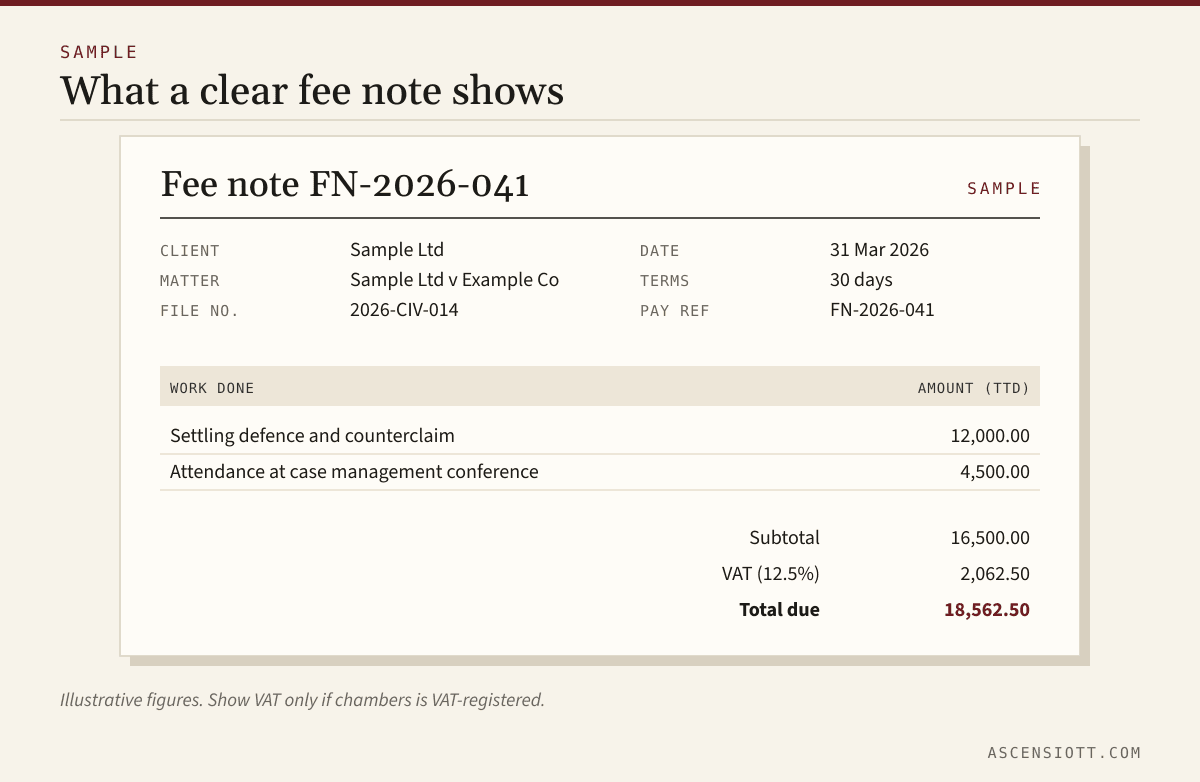
A fee note that answers every question gets paid sooner.
Keep a fees register
A simple register, one row per fee note, shows at a glance what is outstanding. Useful columns are fee note number, client, matter, date issued, amount, date paid, amount paid and balance. Review it every week. Using the same file numbers as your file register links billing to matters.
Match payments to matters
When a payment arrives, record it against the correct fee note straight away. Unmatched payments cause confusion, duplicate reminders and awkward conversations with clients who have already paid.
Follow up on a timetable
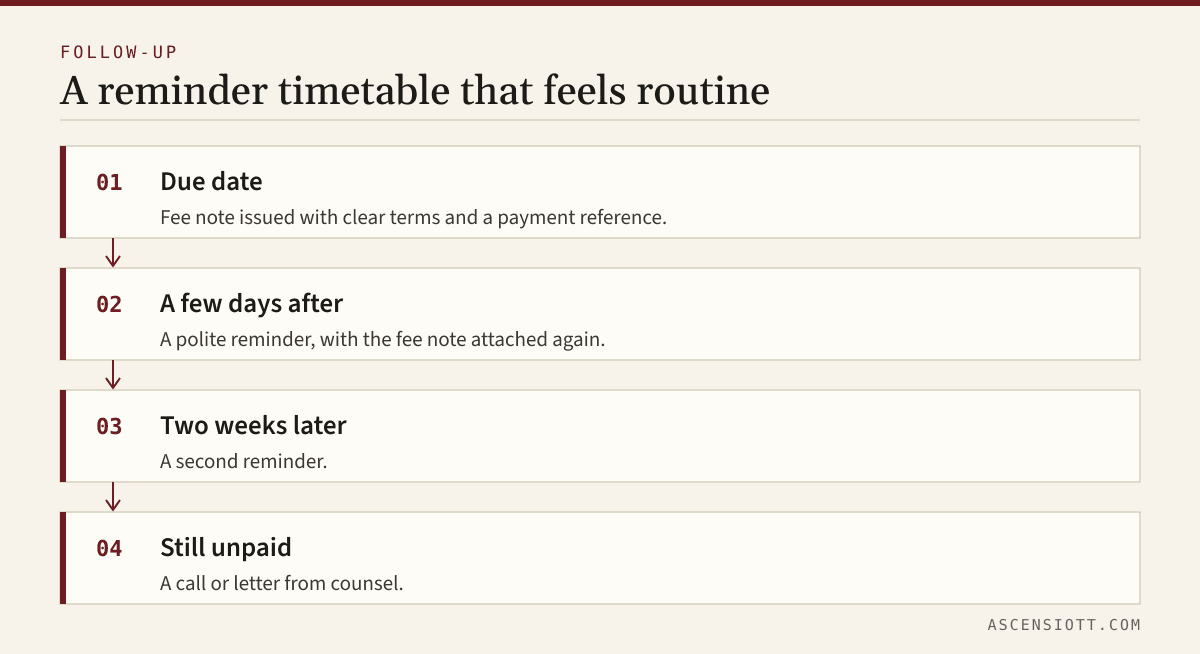
Consistency keeps reminders from feeling personal.
Keep chambers expenses separate
Rent, shared expenses and disbursements should be recorded separately from fees, with receipts filed by month. A monthly expense statement shows where the money goes and makes it easy to prepare information for the accountant.
Quick answers
How often should chambers issue fee notes? At the end of each stage of a matter or monthly, on a fixed routine.
What is the simplest way to track unpaid fees? A fees register reviewed weekly, with payments matched as soon as they arrive.
Is billing admin the same as accounting? No. Billing admin keeps the records in order. Accounts and tax returns stay with chambers' accountant.
What should a fee note include? A number, date, client, matter, work done, amount, any VAT, total, terms and a payment reference.
Ascensio Legal Support handles fee notes, fees registers, payment matching, reminders and monthly expense statements for chambers. We do not hold client money or provide accounting or tax services.