A Trinidad and Tobago police certificate of character is one of the documents most often requested from Trinbagonians abroad: for permanent residence and citizenship applications, new jobs, study and volunteer work. If you no longer live at home, getting one takes some planning. Here is how the process generally works.
Procedures and fees change and can differ between missions. Always check the current instructions from the Trinidad and Tobago Police Service (TTPS) and your nearest Trinidad and Tobago consulate or high commission before you start.
What the certificate is
The certificate of character is issued by the TTPS. It states whether a person has any criminal convictions recorded in Trinidad and Tobago. Citizens can apply, and so can foreign nationals who used to live here.
If you are in Trinidad and Tobago
Applications are made online through the TTPS services portal. You choose an appointment date and police station, attend to have your fingerprints taken and pay the processing fee, then return to collect the certificate when it is ready.
If you live abroad
From overseas, the process is built around a set of fingerprints taken where you live. Mission instructions generally follow these steps:
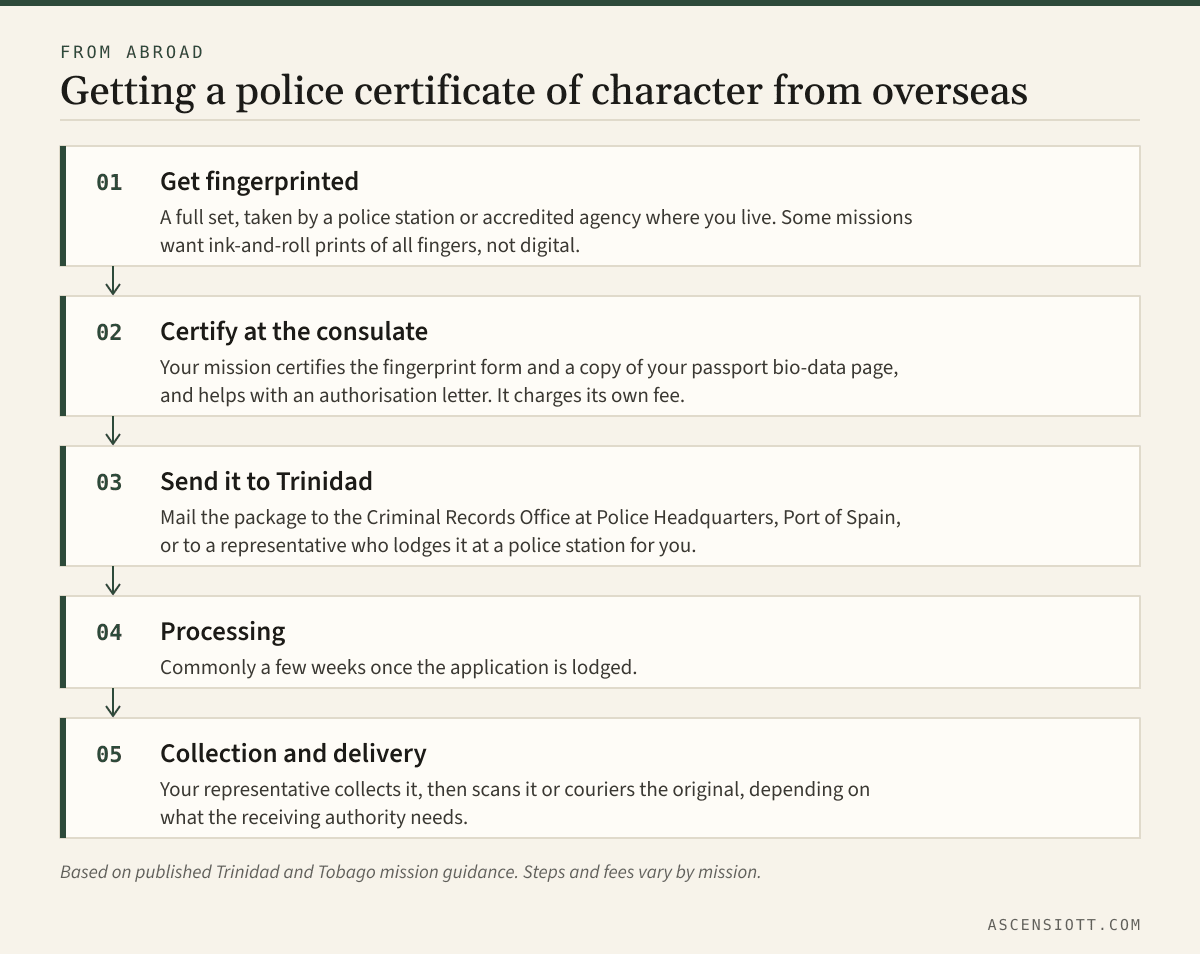
The overseas process, step by step.
1. Get fingerprinted
Have a full set of fingerprints taken by a police station or accredited fingerprinting agency where you live. Check which format is accepted: some missions specify traditional ink-and-roll prints of all fingers rather than digital prints.
2. Have your documents certified at the consulate
Book an appointment with your nearest Trinidad and Tobago mission. It will typically certify your fingerprint form and a copy of your passport bio-data page, and help with a letter of authorisation. The mission charges its own fee.
3. Choose how the application reaches the TTPS
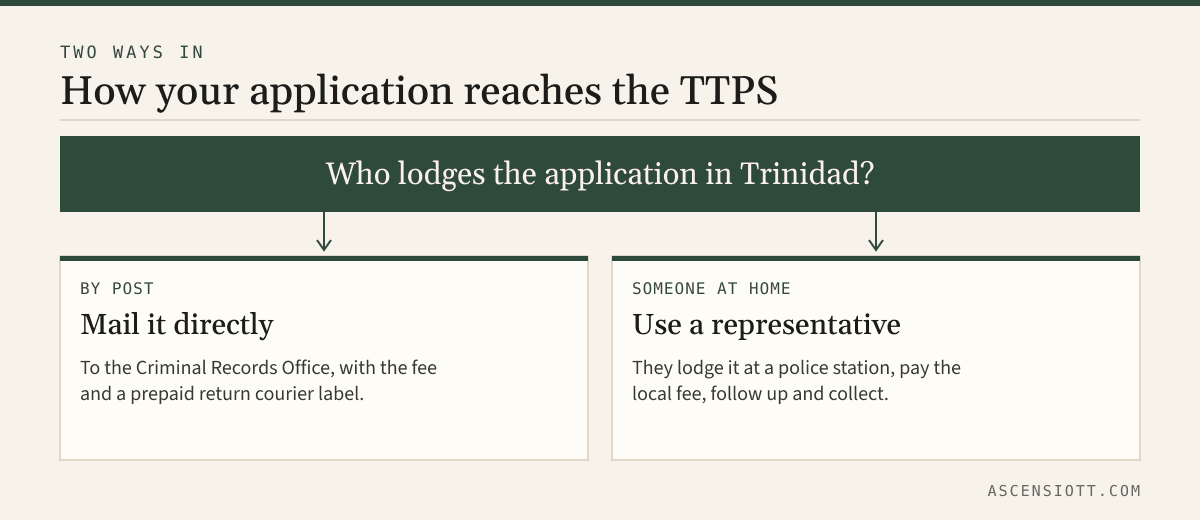
Both routes start with the same certified fingerprints.
Either way, use a tracked courier: fingerprint forms are hard to replace.
4. Processing and collection
Processing commonly takes a few weeks once the application is lodged. If you used a representative, they collect the certificate and either courier the original to you or scan it, depending on what the receiving authority needs.
Tips that save time
- Check what the receiving authority needs. Some accept a scan uploaded online; others insist on the original. Know which before you start.
- Check how recent it must be. Many immigration authorities and employers only accept certificates issued within a set period, so time your application around your deadline.
- Use your name exactly as it appears on your passport, and include any former names, such as a maiden name.
- Keep copies of everything you send, with all receipts and reference numbers.
- Need it apostilled? Some countries want an apostille on the certificate. See our guide to apostilles in Trinidad and Tobago.
Having it handled at home
The hardest part from abroad is having someone reliable in Trinidad to lodge the application, follow up with the police station and collect the certificate. Our Documents from Trinidad service does exactly that. Send us your certified documents and authorisation, and we lodge the application, follow up, collect the certificate and send you a scan the same day, with the original by FedEx if you need it. Police certificate support starts at US$175.
Quick answers
Can I get a Trinidad police certificate of character from abroad? Yes. You have fingerprints taken where you live, have them certified by a Trinidad and Tobago mission, and send the application to Trinidad by post or through a representative.
Who issues the certificate? The Trinidad and Tobago Police Service (TTPS), through its Criminal Records Office.
Can someone in Trinidad apply for me? Yes, with your certified documents and a letter of authorisation. They lodge it at a police station, pay the local fee and collect the certificate.
How long does it take? Commonly a few weeks once the application is lodged, plus courier time each way.