Many Trinbagonians abroad still own land or a house at home, or find themselves helping to settle a parent's estate from overseas. Both involve a surprising amount of paperwork, and much of it can only be collected in person in Trinidad. This guide explains what is usually involved and who does what.
This is general information, not legal advice. Property transactions, wills and estates in Trinidad and Tobago should be handled by an attorney-at-law, who will advise on your situation. Ascensio is not a law firm.
Keeping on top of property you own
If you own property in Trinidad and Tobago, keep a simple, up-to-date file, even while you live abroad:
- Copies of your title documents. Most land is recorded at the Registrar General's Department, either as registered deeds or under the Real Property Ordinance system. Certified copies and searches can be obtained there.
- Bills and receipts. Keep a record of property-related taxes, municipal bills and utilities, with proof of payment. Property tax arrangements have changed several times in recent years, so check the current position with the Board of Inland Revenue or your attorney rather than relying on old information.
- Someone you trust locally. Unvisited property invites problems, from unpaid bills to encroachment. Regular checks and a local contact make a real difference.
If you want someone to act for you in a property matter while you are abroad, your attorney may advise a power of attorney. How it is signed, certified and registered depends on where you sign it, so take your attorney's advice before signing anything. Documents signed abroad often need an apostille or legalisation to be used in Trinidad and Tobago.
When a relative in Trinidad dies
Settling an estate is a legal process, usually handled by an attorney through the High Court: a grant of probate where there is a will, or letters of administration where there isn't. Families are often surprised by how many documents the attorney asks for.
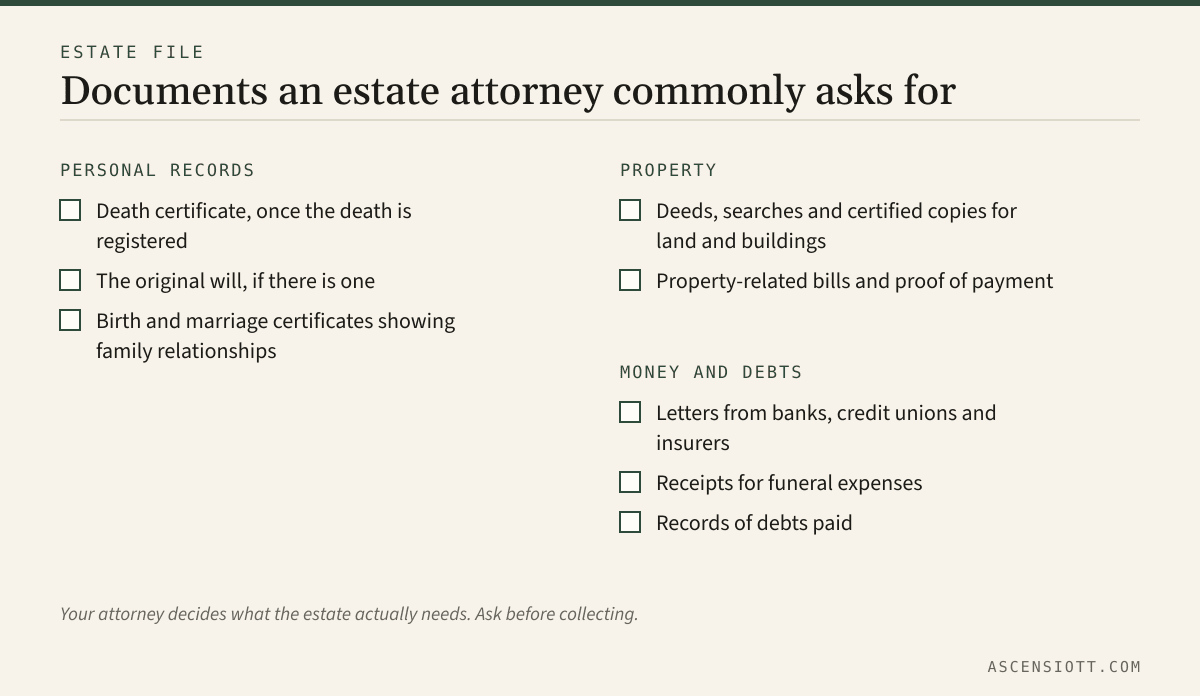
Most of these can only be collected in person in Trinidad.
Collecting these from abroad is slow. Many must be requested in person, followed up and collected from different offices across Trinidad. Our guides to death certificates and what to do next and getting relatives' certificates cover the first documents most estates need.
Practical tips for families abroad
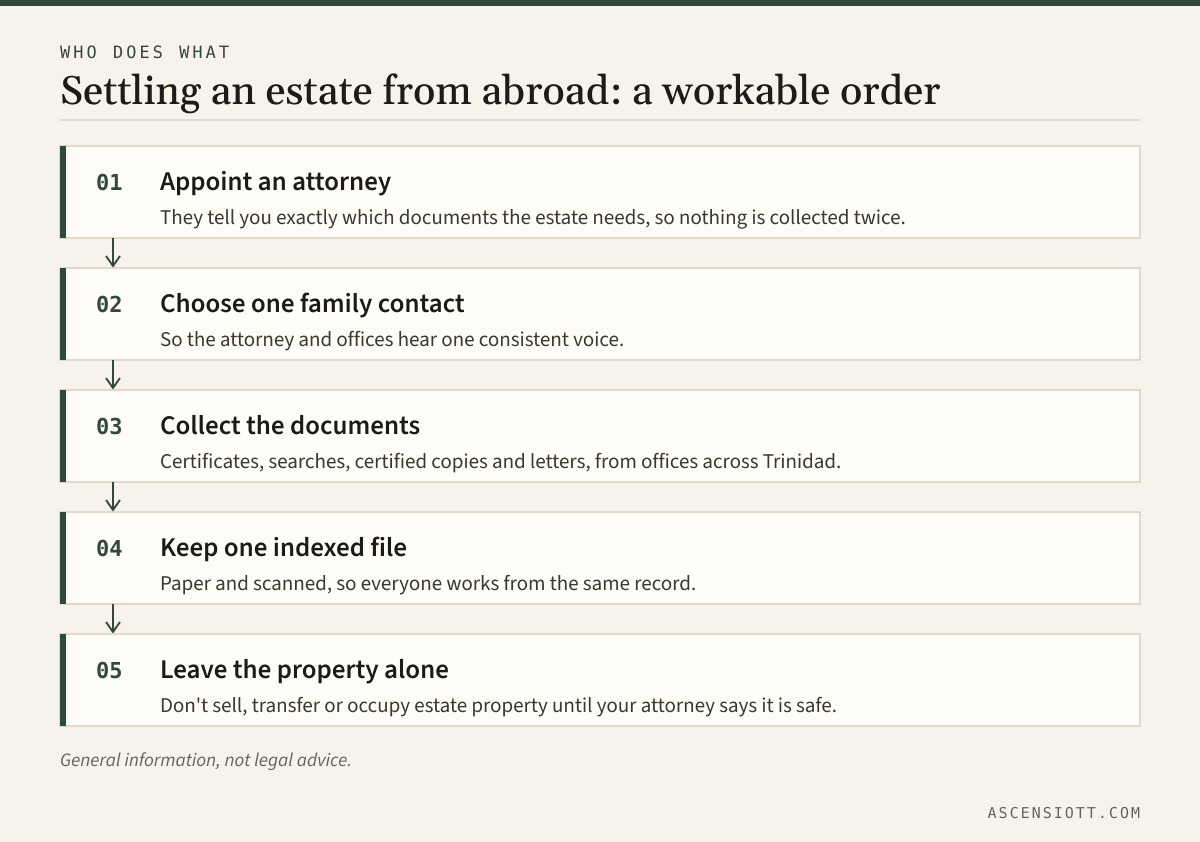
A simple order that prevents most delays.
If you don't know an attorney at home, ask for a recommendation. We can suggest some.
How Ascensio helps
We are not attorneys and do not give legal advice. If you don't yet have an attorney in Trinidad and Tobago, we can recommend experienced attorneys-at-law for you to approach. The choice is always yours, and your agreement for legal services is directly with the attorney.
What we do ourselves is the legwork, alongside you and your attorney. We collect certificates, run searches and obtain certified copies of deeds, request bank and insurance letters where the family is entitled to them, gather bills and receipts, and deliver one organised, indexed file to your attorney. Families abroad get scans and regular updates by WhatsApp or email. Estate document packs start at US$495 through Documents from Trinidad.
Quick answers
Can I settle a parent's estate in Trinidad from abroad? Yes, through an attorney in Trinidad and Tobago, with someone local to collect documents and attend offices where needed.
What documents does an estate attorney need? Usually the death certificate, the will if there is one, family certificates, deeds and searches for property, and letters from banks and insurers.
Where are property records kept? Mostly at the Registrar General's Department, as registered deeds or under the Real Property Ordinance system.
Can I sell inherited property straight away? Not until the estate is properly dealt with. Don't sell, transfer or occupy estate property until your attorney says it is safe.