Applying to study in the US, Canada or the UK from the Caribbean involves two separate processes: getting accepted by a school, then getting permission to study in the country. Students often focus on the first and run out of time on the second. This checklist helps you plan both.
The timeline
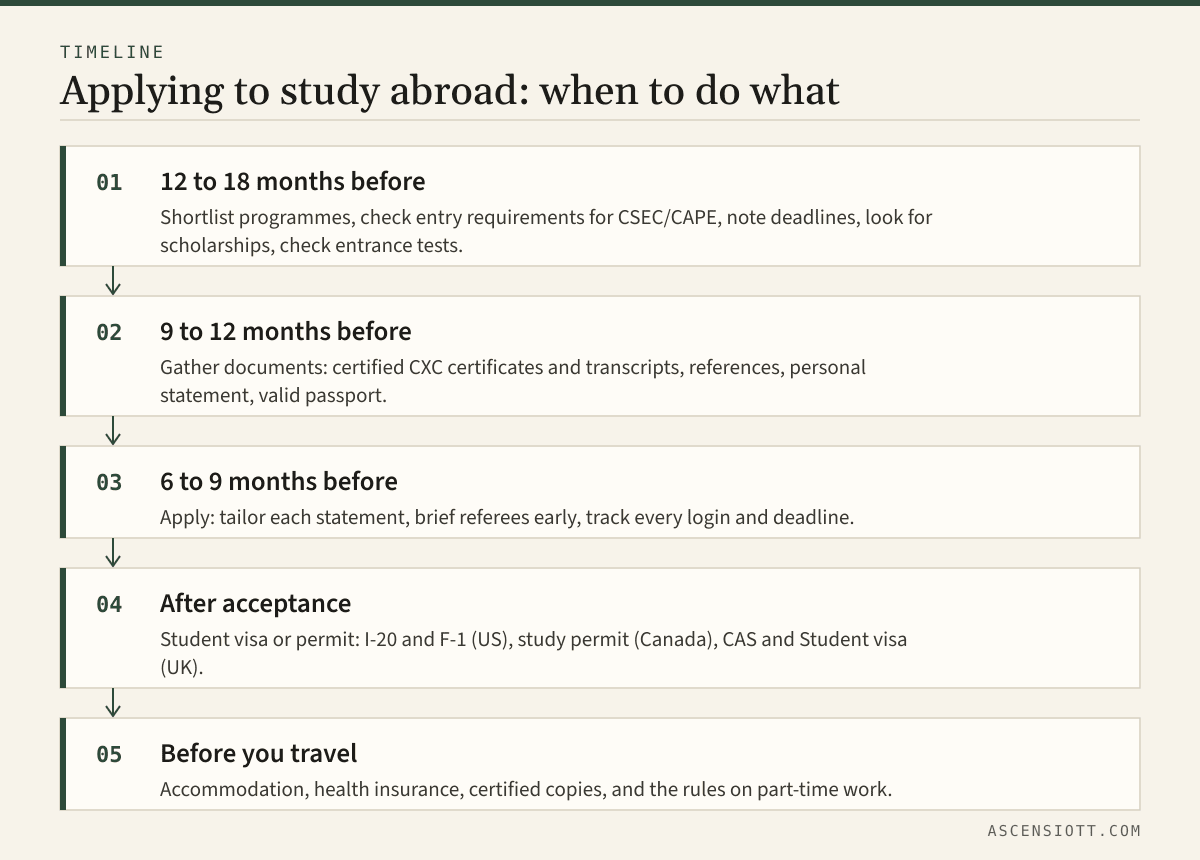
Most delays come from starting the document stage too late.
12 to 18 months before you start: research
- Shortlist programmes and schools, and check entry requirements for applicants with CSEC, CAPE or equivalent qualifications.
- Note every deadline. Many universities have early deadlines for scholarships.
- Check whether you need entrance tests such as the SAT or ACT for US undergraduate study, or the GRE or GMAT for some graduate programmes.
- Look for scholarships: government, university and private awards.
9 to 12 months before: gather documents
Most applications ask for:
- certified copies of CXC certificates and school or university transcripts;
- a personal statement or admissions essay;
- two or three academic or professional references;
- a CV for graduate applications;
- a valid passport, with plenty of time before it expires;
- English proficiency evidence if required. Many universities accept CXC English from Caribbean applicants, but check each school.
Ordering transcripts and certified copies can take weeks, so start early. If a school or visa office wants your birth certificate or an apostille, order those at the same time.
6 to 9 months before: apply
- Tailor your personal statement to each programme. Generic statements are easy to spot.
- Ask referees early and give them your CV and the deadline.
- Keep a tracker of every application, login and deadline.
After you are accepted: the student visa or permit
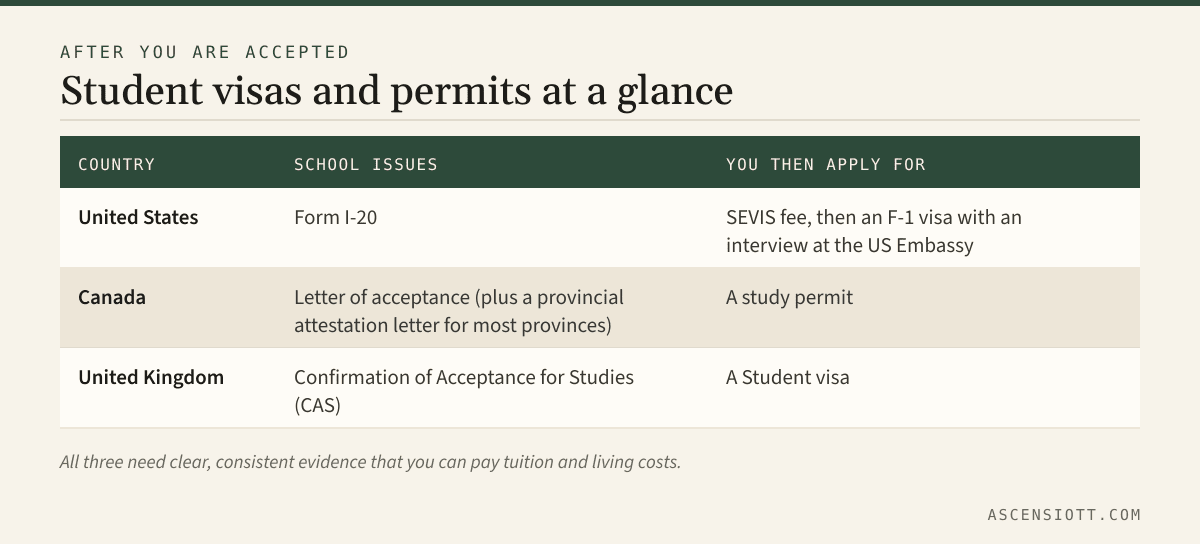
Each country runs its own process after you are accepted.
Bank statements, scholarship letters and sponsor letters need to be clear and consistent with each other.
Before you travel
- Arrange accommodation and health insurance.
- Get certified copies of key documents and keep digital copies.
- Check whether you can work part time during your studies, and within what limits.
How we can help
Our study abroad service helps students organise applications, documents and personal statements. Ascensio is not a law firm and does not give immigration advice. For Canadian study permits we prepare documents only and recommend review by an authorised Canadian immigration representative.
Quick answers
Do Caribbean students need IELTS or TOEFL? Often not if English is their first language and they have CXC English, but requirements vary by school and country.
When should I start applying? Ideally 12 to 18 months before your intended start date.
What is the most common delay? Missing or late documents, especially certified transcripts and proof of funds.
What do I need for a US student visa? A Form I-20 from your school, the SEVIS fee, and an F-1 visa interview at the US Embassy.