Recordings of hearings, interviews and client meetings are among the most sensitive material a chambers holds. Sending them out for transcription can save counsel days of work, but only if the provider handles them with the same care chambers would. Here is what to check before you send a single file.
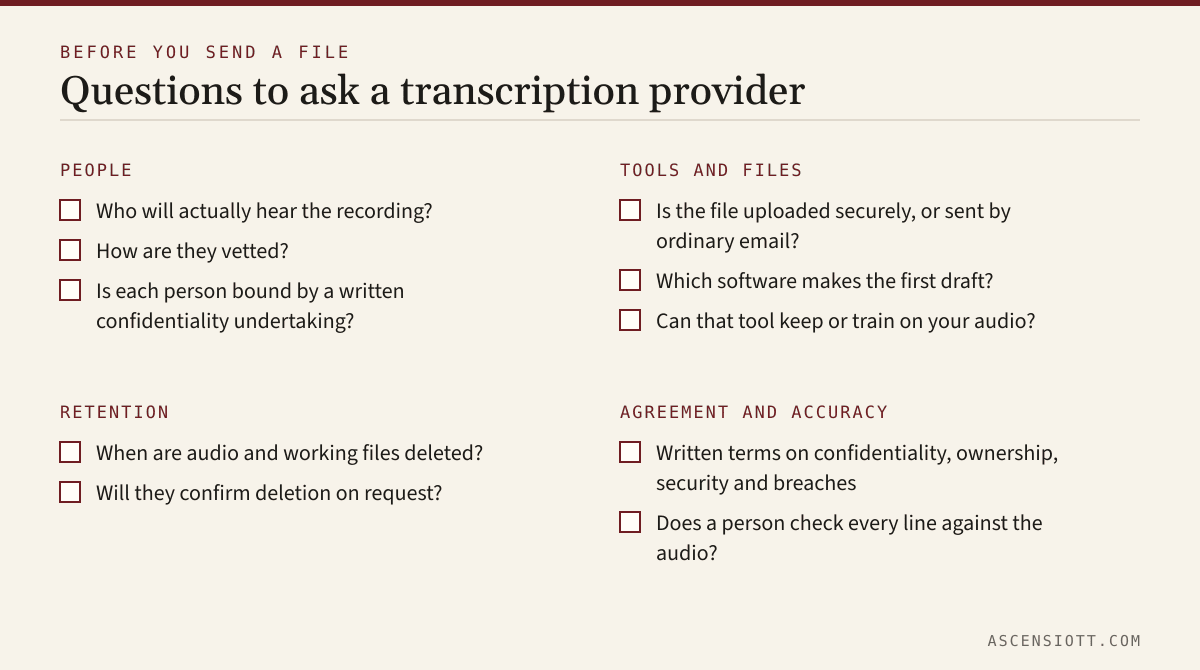
If a provider can't answer these, don't send the file.
Who will hear the recording?
Ask who will actually listen to the audio. Is it one named team, or will the file be passed to freelancers you know nothing about? A reputable provider should be able to tell you how its people are vetted, and confirm that each person is bound by a written confidentiality undertaking.
Where does the recording go?
- Is the file uploaded to a secure, access-controlled location, or sent by ordinary email?
- Is the recording processed by free online transcription tools that may keep or reuse what is uploaded?
- Which software produces any first draft, and do its terms allow it to train on your audio?
Free and consumer AI transcription tools are convenient, but some keep uploaded content. That is a real risk for privileged or sensitive material.
How long is it kept?
Agree a retention period. Once the transcript is delivered and accepted, the audio and working files should be deleted on a set timetable, and the provider should confirm deletion if you ask.
What is in the agreement?
A short written agreement or engagement letter should cover:
- confidentiality, including after the work ends;
- who owns the transcript (it should be chambers or the client);
- security of files in transit and at rest;
- deletion of audio and working copies;
- what happens if there is a data breach.
Is a person checking every line?
Accuracy is part of confidentiality. A transcript that mishears a name, a figure or a denial can mislead counsel. Ask whether a person listens to the full recording and corrects the draft, or whether you are getting machine output with a light skim. Our guide to verbatim and clean transcripts covers what a good legal transcript should look like.
Data protection
Recordings usually contain personal information about witnesses, clients and third parties. In Trinidad and Tobago and across the region, data protection laws and professional duties of confidentiality both apply. A provider should understand that and be able to explain how it handles personal data.
Quick answers
Is it safe to use AI transcription for court recordings? Only if you know where the audio goes and that it isn't kept or reused. A human-verified service using controlled tools is safer for sensitive material.
Should transcribers sign confidentiality agreements? Yes. Every person who hears the recording should be bound in writing.
How long should a provider keep my audio? Only as long as needed to complete and correct the transcript, then it should be deleted.
Who should own the transcript? Chambers or the client, stated in the agreement.
Ascensio Legal Support transcribes hearings, interviews and meetings for counsel with vetted, confidentiality-bound transcribers, secure file handling and a person checking every line.